
Introduction
Invoice factoring is a cash flow solution that allows businesses to get money from unpaid invoices before clients actually pay. For freelancers, agencies, consultants, and online service businesses, this can sound attractive because late client payments are one of the most common business problems.
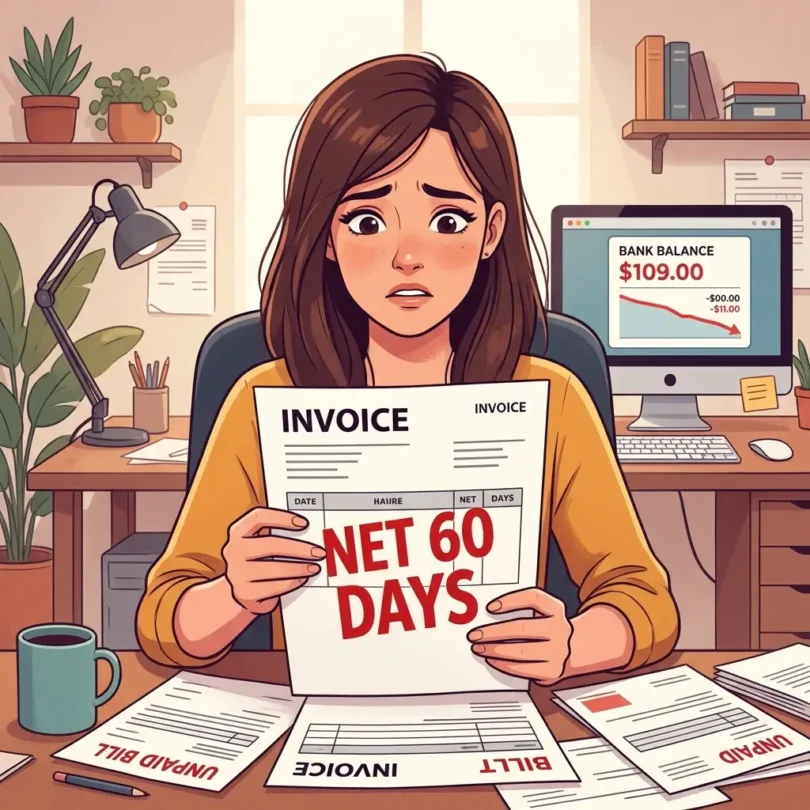
You may complete the work, send the invoice, and still wait 30, 45, 60, or even 90 days for payment. During that waiting period, you may need to pay contractors, software bills, advertising costs, taxes, rent, internet, subscriptions, or salaries.
Invoice factoring helps solve this timing problem by turning unpaid invoices into faster cash. Instead of waiting for the client to pay, you sell the invoice to a factoring company at a discount. The factoring company gives you most of the invoice amount upfront, then collects payment from the client later.
But invoice factoring is not free money. It has costs, risks, contract terms, and client relationship issues. For some businesses, it can be useful. For others, it can be too expensive or unnecessary.
This guide explains what invoice factoring is, how it works, how much it may cost, the difference between recourse and non-recourse factoring, and whether it makes sense for freelancers, agencies, consultants, and online businesses.
What Is Invoice Factoring?
Invoice factoring is a financial arrangement where a business sells its unpaid invoices to a third-party company, called a factoring company or factor, at a discount. The purpose is to improve cash flow instead of waiting for customers to pay invoices after 30, 60, or 90 days. (eCapital)
In simple words:
Invoice factoring lets you get paid earlier for invoices that your clients have not paid yet.
Example:
- You complete work for a client.
- You send a $10,000 invoice.
- The client has 45 days to pay.
- You sell the invoice to a factoring company.
- The factoring company gives you most of the money upfront.
- The client later pays the factoring company.
- The factoring company deducts its fee.
- You receive the remaining balance, if any.
Invoice factoring is often used by businesses that work with other businesses, also known as B2B companies. It is less common for businesses that sell directly to consumers.
Is Invoice Factoring a Loan?
Invoice factoring is usually not the same as a traditional loan.
With a loan, you borrow money and repay it over time with interest. With invoice factoring, you sell an unpaid invoice to a factoring company. The factoring company advances money based on the invoice and collects payment from the customer.
This is an important difference because factoring is based mainly on your accounts receivable, not only on your credit score.
However, even though factoring may not be structured like a normal loan, it can still be expensive. It can also create obligations depending on the contract.
For example, with recourse factoring, you may still be responsible if the client does not pay.
That is why you should read the agreement carefully before signing.
How Invoice Factoring Works
Invoice factoring usually follows a clear process.
Step 1: You Complete Work for a Client
First, you deliver a service or product to a business client.
Examples:
- A marketing agency completes a monthly campaign.
- A freelance developer finishes a software project.
- A content agency delivers articles.
- A consultant completes a strategy project.
- A staffing company provides workers.
- A logistics company completes delivery services.
Factoring usually applies after work has been completed and an invoice has been issued.
Step 2: You Send an Invoice
You send an invoice to the client with payment terms.
Common payment terms include:
- Due on receipt
- Net 7
- Net 15
- Net 30
- Net 45
- Net 60
- Net 90
Invoice factoring is most useful when payment terms are long, such as net 30, net 45, net 60, or net 90.
Step 3: You Submit the Invoice to a Factoring Company
You submit the unpaid invoice to a factoring company.
The factoring company may review:
- Invoice amount
- Client name
- Client creditworthiness
- Payment terms
- Your business history
- Whether the invoice is disputed
- Whether the work was completed
- Whether the client has a record of paying on time
- Your industry
- Your monthly invoice volume
Factoring companies often care more about your client’s ability to pay than your personal credit score.
Step 4: The Factoring Company Advances Money
If approved, the factoring company gives you an upfront advance.
Common advance rates are often around 70% to 90% of the invoice value, though exact terms depend on the provider, industry, invoice quality, and customer risk. Xero’s 2026 guide lists typical advance rates at 70% to 90% and factoring fees commonly around 1% to 5% of invoice value. (Xero)
Example:
- Invoice amount: $10,000
- Advance rate: 85%
- Upfront payment: $8,500
- Reserve held: $1,500
The reserve is the remaining amount held until the client pays.
Step 5: The Client Pays the Factoring Company
In many factoring arrangements, the client pays the factoring company directly.
This is one of the biggest differences between invoice factoring and other financing methods.
Your client may receive instructions to pay the factor instead of paying your business bank account.
This can be helpful because the factor handles collection. But it can also create a client relationship issue if the client is not comfortable dealing with a third party.
Step 6: You Receive the Remaining Balance Minus Fees
After the client pays the invoice, the factoring company deducts its fees and releases the remaining balance to you.
Example:
- Invoice amount: $10,000
- Advance received: $8,500
- Factoring fee: $400
- Remaining balance released: $1,100
- Total received: $9,600
In this example, the cost of factoring is $400.
Invoice Factoring Example
Let’s say you run a small digital marketing agency.
You complete work for a corporate client and send an invoice.
Invoice details:
- Invoice amount: $20,000
- Payment terms: Net 60
- Client type: Corporate business
- Your problem: You need money now to pay contractors and software bills
A factoring company offers:
- 85% advance rate
- 3% factoring fee
- Client pays factor directly
Here is how it works:
- You sell the invoice to the factoring company.
- You receive 85% upfront.
- Upfront cash: $17,000
- Reserve held: $3,000
- Client pays $20,000 after 60 days.
- Factoring company deducts 3% fee.
- Fee: $600
- Remaining reserve released: $2,400
- Total you receive: $19,400
You got cash faster, but you paid $600 for that speed.
Why Businesses Use Invoice Factoring
Businesses use invoice factoring mainly to improve cash flow.
Common reasons include:
- Clients pay slowly.
- Payment terms are too long.
- Contractors need to be paid before clients pay.
- Payroll is due before invoices are collected.
- Business is growing quickly.
- Cash is tied up in accounts receivable.
- The business does not qualify for a traditional bank loan.
- Seasonal income creates cash gaps.
- A large client invoice is unpaid.
- The business needs working capital quickly.
For agencies and service businesses, factoring may help when there is a gap between doing the work and receiving payment.
Who Uses Invoice Factoring?
Invoice factoring is usually used by businesses that sell to other businesses and issue invoices with payment terms.
Common users include:
- Marketing agencies
- Staffing companies
- Logistics companies
- Trucking businesses
- Manufacturing suppliers
- Wholesale businesses
- IT service providers
- Consulting firms
- Creative agencies
- B2B contractors
- Security service companies
- Cleaning companies
- Healthcare suppliers
- Construction subcontractors
For freelancers, factoring is less common unless the freelancer has larger B2B invoices.
A solo freelancer with many small consumer clients may not be a good fit. But a consultant with a $15,000 invoice from a corporate client may be a possible fit.
Invoice Factoring vs Invoice Financing
Invoice factoring and invoice financing are related, but they are not always the same.
Invoice Factoring
With invoice factoring:
- You sell invoices to a factoring company.
- The factor may collect payment from your client.
- Your client may know that factoring is being used.
- The factoring company may manage collections.
- The cost is deducted from the invoice proceeds.
Invoice Financing
With invoice financing:
- You borrow against unpaid invoices.
- You may still collect payment from the client yourself.
- The client may not know financing is being used.
- You repay the financing provider after the client pays.
- It may feel more like a loan backed by invoices.
Investopedia explains invoice financing as a method where businesses use unpaid invoices to improve cash flow, and notes that invoice factoring involves selling invoices while invoice discounting allows the business to retain more control over customer payments. (Investopedia)
The exact meaning depends on the provider, so always read the contract.
Types of Invoice Factoring
There are several types of invoice factoring. The most important distinction is recourse vs non-recourse factoring.
1. Recourse Factoring
Recourse factoring means your business may be responsible if the client does not pay the invoice.
If the factoring company cannot collect from the client, you may have to:
- Buy back the invoice
- Replace it with another invoice
- Repay the advance
- Pay additional fees
- Accept collection actions under the contract
Recourse factoring is common because it reduces risk for the factoring company. RTS explains that recourse factoring is the most common type and means the business must buy back invoices the factoring company cannot collect. (RTS)
Best for:
- Businesses with reliable clients
- Lower-risk invoices
- Companies wanting lower factoring fees
- Invoices with strong payment history
Main risk:
You still carry the risk if the customer does not pay.
2. Non-Recourse Factoring
Non-recourse factoring means the factoring company accepts more risk if the client does not pay. However, this protection is often limited.
Non-recourse does not always cover every situation. For example, if the client refuses to pay because of a dispute about your work, you may still be responsible.
NerdWallet notes that some non-recourse factoring agreements only cover specific situations, so businesses may still be responsible in certain cases if a customer does not pay. (NerdWallet)
Best for:
- Businesses that want more protection
- Invoices from strong corporate clients
- Companies willing to pay higher fees for risk transfer
Main risk:
Non-recourse factoring may cost more and may include exclusions.
3. Notification Factoring
With notification factoring, your client is notified that the invoice has been factored. The client pays the factoring company directly.
Best for:
- Businesses comfortable with client notification
- B2B companies with formal payment processes
- Industries where factoring is common
Main risk:
The client knows you are using factoring, which may affect perception.
4. Non-Notification Factoring
With non-notification factoring, the client may not be directly told that a factoring company is involved. This can help protect the client relationship.
However, non-notification factoring may have stricter requirements and may not be available for all businesses.
Best for:
- Businesses that want privacy
- Agencies concerned about client perception
- Companies with stronger financial history
Main risk:
It may be harder to qualify and may cost more.
How Much Does Invoice Factoring Cost?
Invoice factoring costs vary widely.
Typical costs may depend on:
- Invoice amount
- Client credit quality
- Payment terms
- Industry
- Monthly invoice volume
- Advance rate
- Recourse or non-recourse structure
- Contract length
- Whether the client pays on time
- Additional service fees
Xero’s 2026 guide lists factoring fees commonly around 1% to 5% of invoice value and advance rates typically around 70% to 90%. (Xero) Other providers may advertise different ranges, so you should always check the exact fee schedule before signing.
Common invoice factoring fees include:
- Factoring fee
- Discount rate
- Service fee
- Processing fee
- Wire fee
- Setup fee
- Due diligence fee
- Monthly minimum fee
- Termination fee
- Late payment fee
- Credit check fee
- Reserve fee
The important question is not only “what is the fee?” The better question is:
How much will I actually receive after all deductions?
Invoice Factoring Cost Example
Suppose you factor a $12,000 invoice.
Terms:
- Advance rate: 85%
- Factoring fee: 3%
- Client pays in 45 days
Calculation:
- Invoice value: $12,000
- Upfront advance: $10,200
- Reserve held: $1,800
- Factoring fee: $360
- Reserve released after payment: $1,440
- Total received: $11,640
- Total cost: $360
This may seem reasonable if you urgently need cash. But if you factor invoices every month, the cost can add up.
If you factor $12,000 per month at a $360 cost, that equals:
- $360 per month
- $4,320 per year
That is why factoring should be compared carefully against other options.
Pros of Invoice Factoring
Invoice factoring can be useful when used for the right reason.
Main benefits:
- Faster access to cash
- Helps manage slow-paying clients
- Can improve working capital
- May be easier to qualify for than bank loans
- Based partly on client creditworthiness
- Useful for businesses with large unpaid invoices
- Helps pay contractors or suppliers
- Can support growth without waiting for invoices
- May reduce time spent chasing payments
- Useful for businesses with net-30, net-60, or net-90 terms
For agencies, factoring can help cover payroll or contractor costs while waiting for corporate clients to pay.
Cons of Invoice Factoring
Invoice factoring also has important downsides.
Main disadvantages:
- Can be expensive
- Client may be notified
- Client may pay the factoring company directly
- May affect your business image
- Recourse factoring can leave you responsible for unpaid invoices
- Extra fees may apply
- Long contracts may be restrictive
- Not useful without unpaid invoices
- Not suitable for consumer invoices
- May create dependence on factoring
- Client disputes can create problems
Invoice factoring should not be used as a permanent solution for poor pricing, weak contracts, or clients who never pay on time.
Is Invoice Factoring Good for Freelancers?
Invoice factoring can work for some freelancers, but it is not ideal for everyone.
It may make sense for freelancers who:
- Work with business clients
- Send large invoices
- Have long payment terms
- Work with reliable companies
- Need money before the invoice due date
- Have completed the work
- Can afford the factoring fee
- Understand the contract
It may not make sense for freelancers who:
- Work mostly with consumers
- Send small invoices
- Have short payment terms
- Do not have formal contracts
- Have disputed invoices
- Cannot afford the fees
- Want to keep client payment private
- Have better low-cost alternatives
Example:
A freelance software consultant with a $25,000 unpaid invoice from a corporate client may consider factoring if payment is due in 60 days and cash is needed now.
A freelance logo designer with many $200 invoices probably does not need invoice factoring.
Is Invoice Factoring Good for Agencies?
Invoice factoring can be more relevant for agencies than solo freelancers because agencies often have larger invoices and higher operating costs.
It may make sense for agencies that:
- Work with corporate clients
- Have large unpaid invoices
- Pay contractors before clients pay
- Run monthly retainers
- Have payroll obligations
- Experience long payment cycles
- Need cash for growth
- Have reliable accounts receivable
It may not make sense for agencies that:
- Have clients who often dispute invoices
- Depend on sensitive client relationships
- Have high factoring fees
- Can negotiate better payment terms
- Have enough cash reserves
- Can qualify for cheaper financing
For an agency, factoring may be useful during growth. But if the agency always needs factoring to survive, that may signal deeper cash flow problems.
Invoice Factoring for Online Businesses
Online businesses may use factoring if they invoice other businesses and wait for payment. This can apply to B2B service providers, ecommerce suppliers, SaaS vendors with enterprise contracts, and digital agencies.
Invoice factoring may be useful for online businesses that:
- Sell services to other companies
- Have unpaid invoices
- Work on net-30 or net-60 terms
- Need working capital
- Have strong clients but slow payments
- Need to pay suppliers or contractors
It may not be useful for online businesses that:
- Receive instant card payments
- Sell directly to consumers
- Use marketplace payouts
- Do not issue invoices
- Have high chargeback risk
- Have irregular client records
Invoice Factoring Requirements
Requirements vary by provider, but factoring companies often look for:
- Business-to-business invoices
- Completed work or delivered goods
- Creditworthy clients
- Clear invoice terms
- No invoice disputes
- Proof of delivery or completed service
- Business bank account
- Valid business registration in some cases
- Minimum invoice size
- Minimum monthly volume in some cases
- Client payment history
- Tax and identity documents
Some companies may work with newer businesses if the invoices and clients are strong.
Documents You May Need
A factoring company may ask for:
- Unpaid invoices
- Client contracts
- Proof of completed work
- Purchase orders
- Delivery confirmations
- Business registration documents
- Tax identification number
- Bank statements
- Customer payment history
- Accounts receivable aging report
- Personal or business identification
- Void check or bank verification
Freelancers should keep clean records if they want to qualify for any business financing.
Invoice Factoring vs Business Line of Credit
Invoice factoring and business lines of credit are both used for cash flow, but they work differently.
| Feature | Invoice Factoring | Business Line of Credit |
|---|---|---|
| Based on | Unpaid invoices | Credit, revenue, financials |
| Type | Sale of receivables | Borrowed money |
| Client involvement | Often yes | Usually no |
| Best for | Slow-paying B2B invoices | Flexible working capital |
| Repayment | Client pays factor | Business repays lender |
| Cost | Factoring fee | Interest and fees |
| Use case | Completed work waiting for payment | Any approved business need |
| Risk | Client relationship and recourse | Debt and repayment pressure |
A business line of credit may be better if you want flexible funds without involving clients. Invoice factoring may be better if your main problem is waiting for large invoices to be paid.
Invoice Factoring vs Merchant Cash Advance
A merchant cash advance is different from invoice factoring.
Invoice factoring is based on unpaid invoices. A merchant cash advance is usually based on future card sales or revenue.
Merchant cash advances can be expensive and may require frequent repayments. Freelancers and small businesses should be careful with any financing that has unclear pricing or aggressive repayment terms.
Before choosing any financing product, review:
- Total cost
- Repayment structure
- Fees
- Contract length
- Default terms
- Personal guarantee
- Daily or weekly payment requirements
- Early repayment rules
When Invoice Factoring Makes Sense
Invoice factoring may make sense when:
- You already have unpaid invoices.
- Your clients are reliable businesses.
- Payment terms are long.
- You need working capital quickly.
- The factoring fee is lower than the cost of waiting.
- You have no cheaper option.
- You understand the contract.
- Client notification will not damage the relationship.
- The invoice is not disputed.
- The cash will be used for productive business needs.
Good uses may include:
- Paying contractors
- Covering payroll
- Funding a client project
- Handling seasonal cash flow
- Managing growth
- Paying critical operating expenses
When Invoice Factoring Does Not Make Sense
Invoice factoring may not make sense when:
- The invoice is small.
- The client is unreliable.
- The invoice is disputed.
- You cannot afford the fee.
- You have cheaper options.
- Your client relationship is sensitive.
- You sell directly to consumers.
- You need cash before work is completed.
- The factoring contract has restrictive terms.
- You are using factoring to cover repeated losses.
Factoring should solve a timing problem, not hide an unprofitable business model.
How to Choose an Invoice Factoring Company
Before choosing a factoring company, compare carefully.
Important questions include:
- What is the advance rate?
- What is the factoring fee?
- Are there setup fees?
- Are there monthly minimums?
- Are there termination fees?
- Is it recourse or non-recourse factoring?
- Will my client be notified?
- Who collects payment?
- What happens if the client pays late?
- What happens if the client refuses to pay?
- How quickly will I receive funds?
- Are there wire fees or processing fees?
- Is there a long-term contract?
- Can I factor one invoice or must I factor all invoices?
- Is there a minimum monthly volume?
- Are there industry restrictions?
Do not sign based only on the advertised rate. Ask for a written example showing exactly how much you receive from a sample invoice.
Red Flags to Watch For
Be careful if a factoring company:
- Does not clearly explain fees
- Pressures you to sign quickly
- Promises approval without reviewing invoices
- Has confusing contract language
- Requires long-term lock-in without flexibility
- Charges large termination fees
- Does not explain recourse obligations
- Hides client notification terms
- Does not provide a sample cost breakdown
- Has poor customer reviews
- Refuses to answer questions directly
- Uses aggressive collection methods that may hurt clients
The FTC advises small business borrowers to avoid rushing financing decisions, ask for total cost details, and understand repayment obligations before agreeing to financing terms. (Federal Trade Commission)
Safer Alternatives to Invoice Factoring
Before using invoice factoring, consider safer or lower-cost alternatives.
1. Ask for Deposits
Request an upfront deposit before starting work.
Common deposit structures include:
- 25% upfront
- 30% upfront
- 50% upfront
- 100% upfront for small projects
Deposits reduce your need to finance client work yourself.
2. Use Milestone Payments
For large projects, split the invoice into milestones.
Example:
- 30% before work begins
- 40% after first draft or first phase
- 30% before final delivery
This helps improve cash flow and reduces risk.
3. Shorten Payment Terms
Instead of net 60, try:
- Due on receipt
- Net 7
- Net 15
- Net 30
Shorter payment terms can reduce the need for factoring.
4. Offer Early Payment Discounts
You may offer a small discount for faster payment.
Example:
- 2% discount if paid within 7 days
- Full invoice due within 30 days
This may be cheaper than factoring.
5. Use Payment Links
Make it easier for clients to pay by using:
- Stripe payment links
- PayPal invoices
- Wise account details
- Payoneer payment requests
- Bank transfer instructions
- ACH or SEPA details
A convenient payment method can reduce delays.
6. Build a Cash Reserve
A cash reserve is the safest working capital.
Aim for:
- 1 month of expenses
- 3 months of expenses
- 6 months of expenses over time
A reserve helps you avoid expensive financing.
7. Improve Client Screening
Avoid clients who create payment problems.
Before accepting work, check:
- Does the client agree to a contract?
- Do they pay deposits?
- Are they clear about scope?
- Do they have a real business?
- Do they avoid payment discussions?
- Do they have a history of slow payments?
- Are they willing to use written terms?
Good clients reduce the need for factoring.
Best Invoice Factoring Setup for Agencies
If an agency decides to use factoring, it should build a controlled process.
A safer agency setup may include:
- Factor only selected invoices.
- Use factoring only for strong B2B clients.
- Avoid factoring disputed invoices.
- Keep clients informed where needed.
- Compare factoring costs to profit margins.
- Avoid long-term contracts at the start.
- Keep a cash reserve.
- Use milestone payments for new clients.
- Track all fees as business expenses.
- Review factoring dependence every quarter.
Factoring should support growth, not become a permanent emergency solution.
Best Invoice Factoring Setup for Freelancers
Freelancers should be even more careful because income can be irregular.
A safer freelancer setup may include:
- Use factoring only for large B2B invoices.
- Avoid factoring small invoices.
- Check whether the client will be notified.
- Compare the fee with other payment options.
- Use deposits and milestones first.
- Do not factor disputed invoices.
- Read recourse terms carefully.
- Keep a separate tax account.
- Avoid using factoring for personal expenses.
- Build an emergency fund.
For most freelancers, better payment terms are usually safer than factoring.
Common Invoice Factoring Mistakes
Mistake 1: Looking Only at the Advance Rate
A high advance rate sounds attractive, but the fee matters too.
Compare:
- Advance rate
- Factoring fee
- Reserve amount
- Extra charges
- Final received amount
Mistake 2: Ignoring Recourse Terms
With recourse factoring, you may still be responsible if the client does not pay.
Always ask:
- What happens if the client pays late?
- What happens if the client refuses to pay?
- What happens if the client goes bankrupt?
- Do I have to repay the advance?
Mistake 3: Factoring Disputed Invoices
Do not factor invoices if the client is unhappy or the work is disputed. This can create serious problems.
Mistake 4: Not Telling Clients When Required
If the factoring agreement requires client notification, be transparent and professional.
Mistake 5: Using Factoring for Every Cash Problem
Factoring is designed for invoice timing gaps. It should not be used to cover poor pricing, weak sales, or repeated losses.
Mistake 6: Not Comparing Alternatives
Before factoring, compare:
- Deposits
- Milestone payments
- Shorter payment terms
- Business line of credit
- Early payment discounts
- Better invoice follow-ups
- Cash reserve
Final Verdict
Invoice factoring is a way for businesses to get faster cash by selling unpaid invoices to a factoring company. It can help freelancers, agencies, and online businesses manage cash flow when clients take 30, 60, or 90 days to pay.
It is most useful for B2B businesses with reliable clients, large invoices, and long payment terms. It may be helpful for agencies that need to pay contractors or payroll before clients pay. It may also work for some consultants or freelancers with large corporate invoices.
However, invoice factoring is not the best solution for every freelancer. It can be expensive, it may involve client notification, and recourse agreements can leave you responsible if the client does not pay. It is usually not suitable for small consumer invoices, disputed work, or businesses with poor profit margins.
Before using invoice factoring, try safer cash flow strategies first:
- Request deposits.
- Use milestone payments.
- Shorten payment terms.
- Offer early payment discounts.
- Send invoices quickly.
- Use payment links.
- Build a cash reserve.
If you still choose factoring, compare the total cost, read the contract carefully, and make sure the financing solves a real timing problem rather than creating a bigger financial risk.
FAQs
What is invoice factoring?
Invoice factoring is when a business sells unpaid invoices to a factoring company at a discount in exchange for faster cash.
Is invoice factoring a loan?
Invoice factoring is usually not a traditional loan. It is generally structured as a sale of accounts receivable, but some agreements may still create repayment obligations depending on the terms.
How does invoice factoring work?
You send an invoice to a client, sell that invoice to a factoring company, receive an upfront advance, and the factoring company collects payment from the client. After the client pays, the factor deducts fees and releases the remaining balance.
How much does invoice factoring cost?
Invoice factoring fees often vary based on invoice amount, client risk, payment terms, and provider. Xero’s 2026 guide lists typical factoring fees around 1% to 5% of invoice value and advance rates around 70% to 90%. (Xero)
What is recourse factoring?
Recourse factoring means your business may be responsible if the client does not pay the invoice. You may have to repay the advance or buy back the invoice.
What is non-recourse factoring?
Non-recourse factoring means the factoring company accepts more risk if the client does not pay, but protection is often limited to specific situations. Read the contract carefully.
Is invoice factoring good for freelancers?
Invoice factoring may be useful for freelancers with large unpaid B2B invoices from reliable clients. It is usually not ideal for freelancers with small invoices or consumer clients.
Is invoice factoring good for agencies?
Invoice factoring can be useful for agencies with large unpaid invoices and slow-paying business clients. It may help cover contractor payments, payroll, and operating expenses.
Does invoice factoring affect clients?
Yes, it can. In many factoring arrangements, the client is notified and pays the factoring company directly. This may affect the client relationship.
What are alternatives to invoice factoring?
Alternatives include deposits, milestone payments, shorter payment terms, early payment discounts, business lines of credit, payment links, better invoice follow-ups, and building a cash reserve.