
Introduction
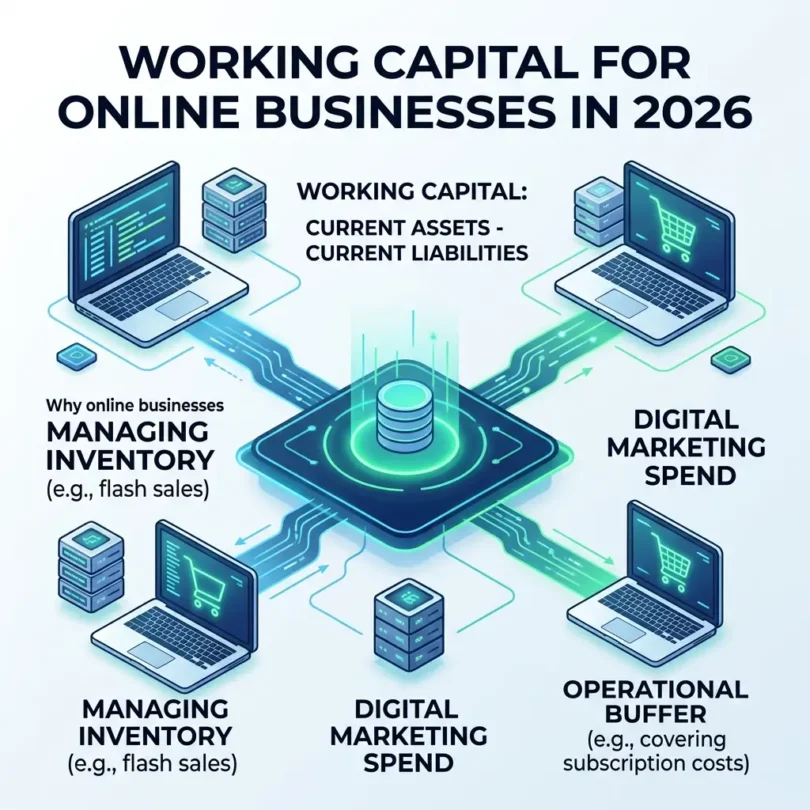
Working capital is the money your business uses to handle everyday operations. For online businesses, this can include software subscriptions, contractor payments, advertising budgets, inventory, website hosting, payment processing fees, taxes, and other regular expenses.
When cash flow is healthy, your business can pay bills on time, accept new projects, launch campaigns, and handle slow months without panic. But when cash flow is tight, even a profitable online business can struggle.
That is why many freelancers, agencies, ecommerce sellers, creators, and digital businesses consider working capital loans.
A working capital loan can provide short-term funding to cover business expenses. It may help you pay contractors before clients pay you, buy inventory before a sales season, fund advertising campaigns, manage delayed marketplace payouts, or cover emergency costs.
But working capital loans are not risk-free. They can be expensive, especially if the repayment period is short or the lender charges high fees. Some loans require personal guarantees. Some lenders use daily or weekly repayments that can hurt cash flow. Some financing offers are marketed aggressively and may not clearly show the total cost.
This guide explains how working capital loans work for online businesses in 2026, what costs to compare, what risks to avoid, and which safer alternatives may be better before borrowing.
What Is a Working Capital Loan?
A working capital loan is financing used to cover short-term business operating expenses. It is not usually meant for long-term investments like buying property or major equipment. Instead, it is designed to help with everyday cash flow needs.
The U.S. Small Business Administration explains that SBA-guaranteed loans can be used for many business purposes, including operating capital, depending on the loan program and lender rules. (Small Business Administration)
Working capital loans may be used for:
- Payroll
- Contractor payments
- Inventory
- Advertising
- Software subscriptions
- Website hosting
- Supplier payments
- Rent or office costs
- Taxes
- Insurance
- Seasonal expenses
- Marketplace payout delays
- Short-term cash flow gaps
- Emergency business expenses
For online businesses, working capital is especially important because revenue and expenses do not always happen at the same time.
For example:
- An ecommerce store may need to buy inventory before sales arrive.
- A digital agency may need to pay contractors before clients pay invoices.
- A freelancer may need software tools before receiving project payments.
- A course creator may need to spend money on ads before launching a product.
- A SaaS startup may need to cover hosting and development costs before subscription revenue grows.
How Working Capital Loans Work
Working capital loans usually provide a lump sum of money or flexible credit access. The business then repays the lender over time, usually with interest or fees.
A basic working capital loan process may look like this:
- You apply with a bank, credit union, online lender, fintech lender, or SBA-approved lender.
- The lender reviews your business revenue, credit profile, bank statements, and cash flow.
- If approved, you receive funds.
- You use the funds for operating expenses.
- You repay the loan through fixed payments, daily payments, weekly payments, or monthly payments.
- The total cost depends on interest, fees, repayment term, and loan structure.
Some working capital products are traditional loans. Others are lines of credit, invoice financing, merchant cash advances, or revenue-based financing.
This matters because each option has different costs and risks.
Why Online Businesses Use Working Capital Loans
Online businesses often operate with uneven cash flow. Money may come in after expenses are already due.
Common reasons online businesses use working capital loans include:
- Buying inventory before a sales season
- Funding paid advertising campaigns
- Paying contractors or freelancers
- Covering delayed client invoices
- Handling slow marketplace payouts
- Paying for software subscriptions
- Managing seasonal revenue drops
- Launching a new product
- Expanding into a new market
- Covering tax bills
- Replacing broken equipment
- Managing emergency expenses
The Federal Reserve’s 2026 Report on Employer Firms found that 86% of small employer firms use financing on a regular basis, with credit cards and loans among the most common financing products. It also found that among firms with debt, 59% used a personal guarantee and 51% used business assets to secure debt. (FedSmallBusiness)
That matters because business financing is common, but it often creates real obligations for owners. A loan should solve a clear cash flow problem, not hide weak margins or poor pricing.
Types of Working Capital Financing
Working capital financing can come in several forms. The right option depends on your business model, revenue stability, credit profile, and repayment ability.
1. Short-Term Business Loan
A short-term business loan gives you a lump sum that you repay over a fixed period.
Repayment terms may range from a few months to a few years, depending on the lender and loan type.
Best for:
- One-time business expenses
- Inventory purchases
- Short-term growth opportunities
- Emergency business costs
- Marketing campaigns
- Equipment replacement
Pros:
- Predictable repayment schedule
- Lump sum funding
- Useful for specific expenses
- May be easier to understand than complex financing
- Can support planned short-term needs
Cons:
- Interest and fees apply
- Repayment starts quickly
- Short terms can create high payment pressure
- May require personal guarantee
- May be expensive through online lenders
- Not ideal for repeated cash flow problems
Example:
An ecommerce business borrows $15,000 to buy inventory before a holiday sales season and repays the loan over 12 months.
2. Business Line of Credit
A business line of credit gives you access to a credit limit. You can draw money when needed and usually pay interest only on the amount you use.
For example:
- Credit limit: $25,000
- Amount used: $8,000
- Remaining available credit: $17,000
A line of credit can be useful for online businesses with changing cash flow. It works like a flexible safety net.
Best for:
- Ongoing cash flow gaps
- Seasonal business expenses
- Contractor payments
- Emergency expenses
- Short-term operating needs
- Businesses with recurring revenue
Pros:
- Flexible access to funds
- Use only what you need
- Interest usually applies only to borrowed amount
- Can be reused if revolving
- Useful for unpredictable expenses
- Often better than borrowing a full lump sum unnecessarily
Cons:
- May require good credit
- Fees may apply
- Variable rates can increase costs
- Easy access may encourage overspending
- Personal guarantee may be required
- Late payments can damage credit
Example:
A digital marketing agency uses a $30,000 line of credit to cover contractor payments when client invoices are delayed.
3. SBA Working Capital Loans
SBA loans are not directly issued by the SBA. Instead, the SBA guarantees loans made by approved lenders. These loans may be used for different business purposes, including working capital, depending on the program and lender requirements. (Small Business Administration)
The SBA also has a 7(a) Working Capital Pilot program. The SBA says the 7(a) WCP can provide working capital against domestic and international orders under one loan facility, and can help new-to-export firms open international markets without needing a separate line of credit. (Small Business Administration)
Best for:
- Established small businesses
- Businesses with strong documentation
- Companies needing larger working capital
- Export-focused businesses
- Businesses that can wait for approval
- Owners who want structured financing
Pros:
- Government-backed loan structure
- Can be used for operating capital depending on program
- May offer better terms than some high-cost online loans
- Useful for larger working capital needs
- Suitable for qualified small businesses
Cons:
- Application process can be slower
- Documentation requirements can be heavy
- Not all businesses qualify
- Personal guarantee may be required
- Lender rules vary
- Some programs restrict use of funds
Example:
An online B2B supplier applies for an SBA-backed working capital facility to support domestic and international customer orders.
4. Invoice Financing
Invoice financing allows a business to borrow against unpaid invoices. Instead of waiting for clients to pay, the business gets cash based on accounts receivable.
Best for:
- Agencies
- Consultants
- B2B service providers
- Businesses with unpaid invoices
- Companies with net-30, net-45, or net-60 terms
Pros:
- Helps unlock cash from unpaid invoices
- Useful for slow-paying clients
- May be easier than traditional loans
- Can help pay contractors before clients pay
- Based partly on invoice quality
Cons:
- Fees can be high
- Not useful without invoices
- Client payment delays can increase cost
- May require business clients, not consumers
- Contract terms vary widely
Example:
A software agency has $40,000 in unpaid invoices due in 45 days and uses invoice financing to cover payroll.
5. Invoice Factoring
Invoice factoring is similar to invoice financing, but instead of borrowing against invoices, you sell invoices to a factoring company.
The factor advances part of the invoice value upfront and collects payment from your client.
Best for:
- B2B businesses with large invoices
- Agencies with corporate clients
- Businesses with long payment terms
- Companies needing faster cash from unpaid invoices
Pros:
- Faster access to invoice cash
- Can help with contractor or payroll payments
- Approval may depend more on client credit
- Useful for businesses with strong accounts receivable
Cons:
- Can affect client relationships
- Client may pay the factoring company directly
- Recourse agreements may leave you responsible if client does not pay
- Fees can add up
- Not useful for consumer sales
Example:
A content agency sells a $20,000 unpaid invoice to a factoring company and receives most of the money upfront.
6. Business Credit Card
A business credit card can be a working capital tool for small purchases and short-term expenses. It is not the same as a loan, but many freelancers and online businesses use credit cards to manage monthly cash flow.
Best for:
- Software subscriptions
- Online tools
- Travel
- Small purchases
- Emergency expenses
- Short-term float
Pros:
- Easy to use
- Useful for recurring expenses
- May offer rewards or cashback
- Can help separate business expenses
- Good for short-term purchases if paid in full
Cons:
- High interest if balance is carried
- Can encourage overspending
- Personal guarantee often required
- Credit utilization can affect credit score
- Not ideal for large long-term financing
Example:
A freelancer uses a business credit card for monthly software subscriptions and pays the balance in full each month.
7. Merchant Cash Advance
A merchant cash advance provides money upfront in exchange for a portion of future sales or revenue. Repayments may happen daily or weekly.
This option can be risky because the cost may be high and repayment can pressure cash flow.
The FTC has highlighted concerns around merchant cash advances, including high costs, aggressive or misleading marketing, failure to adjust payments when sales decrease, and potentially abusive collection practices. (Venable)
Best for:
- Businesses with strong card sales
- Businesses that fully understand the cost
- Short-term urgent needs when safer options are unavailable
Pros:
- Fast funding in some cases
- May not require traditional collateral
- Repayment may be linked to sales
- Can be accessible to some businesses with weaker credit
Cons:
- Can be very expensive
- Daily or weekly repayments may hurt cash flow
- Pricing may be hard to compare with APR
- Aggressive collection risks may exist
- Not ideal for freelancers with irregular income
- Can create a debt cycle
Example:
An online store takes a cash advance against future sales, but daily deductions reduce cash flow during a slow month.
Working Capital Loan Costs to Compare
Before borrowing, compare the full cost. Do not look only at the advertised monthly payment or approval speed.
Important costs include:
- Interest rate
- APR
- Origination fee
- Processing fee
- Draw fee
- Maintenance fee
- Late payment fee
- Prepayment penalty
- Personal guarantee risk
- Collateral requirement
- Daily or weekly repayment pressure
- Total repayment amount
- Cost of borrowing per $1,000
- Default fees
- Renewal fees
The FTC advises small businesses to carefully evaluate financing offers, understand total repayment costs, avoid rushed decisions, and compare terms before borrowing. (Federal Trade Commission)
The most important question is:
How much will this loan cost from start to finish?
APR vs Factor Rate
Some lenders show APR. Others use factor rates, especially for short-term financing or merchant cash advances.
This can make comparison difficult.
APR
APR stands for annual percentage rate. It shows the yearly cost of borrowing, including interest and certain fees.
APR is useful because it helps compare financing options more clearly.
Factor Rate
A factor rate is usually shown as a decimal, such as:
- 1.10
- 1.20
- 1.35
Example:
- Borrowed amount: $10,000
- Factor rate: 1.25
- Total repayment: $12,500
- Total cost: $2,500
A factor rate may look simple, but it does not show the same information as APR. A short repayment period can make the effective cost much higher.
Before accepting financing with a factor rate, ask for:
- Total repayment amount
- Repayment schedule
- Estimated APR equivalent
- Fees
- Prepayment rules
- Daily or weekly payment amount
Working Capital Loan Requirements
Requirements vary by lender, but online businesses may be asked for:
- Business registration documents
- Business bank statements
- Personal identification
- Tax identification number
- Revenue history
- Credit score
- Profit and loss statement
- Balance sheet
- Tax returns
- Payment processor statements
- Marketplace sales reports
- Ecommerce platform reports
- Client invoices
- Accounts receivable report
- Business plan in some cases
Newer businesses may face stricter requirements or higher costs.
Lenders may review:
- Monthly revenue
- Time in business
- Cash flow stability
- Existing debt
- Credit history
- Business industry
- Chargeback risk
- Profit margins
- Personal guarantee
- Collateral
Best Uses of Working Capital Loans
A working capital loan can be useful when it supports a clear business purpose and repayment plan.
Good uses may include:
- Buying inventory with expected demand
- Covering contractor payments for signed client work
- Funding profitable ad campaigns with proven results
- Handling temporary cash flow gaps
- Managing seasonal expenses
- Covering emergency business repairs
- Supporting confirmed purchase orders
- Bridging delayed client payments
- Paying essential operating costs during a short slowdown
The key is that the loan should help your business generate or protect income.
Risky Uses of Working Capital Loans
A working capital loan can become dangerous if used for the wrong reason.
Risky uses include:
- Covering repeated losses
- Funding untested ad campaigns
- Paying personal expenses
- Borrowing without a repayment plan
- Taking high-cost financing for low-margin products
- Paying old debt with new expensive debt
- Borrowing to avoid fixing pricing problems
- Covering clients who never pay on time
- Taking loans because approval is fast
- Ignoring total repayment cost
If your business cannot repay the loan from normal cash flow, borrowing may create a bigger problem.
Working Capital Loans for Freelancers
Freelancers may use working capital loans for short-term needs, but they should be careful. Freelance income can be irregular, and loan payments may continue even during slow months.
A working capital loan may make sense for freelancers when:
- Income is stable.
- A signed client contract exists.
- Payment is delayed but expected.
- The loan cost is reasonable.
- The freelancer has a repayment plan.
- The money is used for business needs.
- The freelancer has a separate business account.
It may not make sense when:
- Income is unpredictable.
- The freelancer has no signed work.
- The loan is used for personal expenses.
- The cost is high.
- There is already too much debt.
- The freelancer cannot handle slow months.
- The financing has daily repayment pressure.
For most freelancers, safer options include deposits, milestone payments, retainers, and emergency savings.
Working Capital Loans for Agencies
Agencies may have stronger reasons to use working capital loans because they often have contractors, payroll, software costs, and client payment delays.
A working capital loan may help agencies:
- Pay contractors before clients pay
- Handle payroll timing gaps
- Fund new client onboarding
- Cover software and tools
- Manage retainer payment delays
- Support growth during busy periods
- Bridge invoice collection gaps
However, agencies should compare loan cost against project profit margins.
Example:
- Client project profit margin: 20%
- Financing cost: 12%
- Remaining margin: 8%
If financing costs eat most of the profit, the project may not be worth taking.
Working Capital Loans for Ecommerce Businesses
Ecommerce businesses often need working capital for inventory and advertising.
A loan may make sense if:
- Demand is proven.
- Margins are strong.
- Inventory turnover is predictable.
- Advertising return is known.
- Marketplace payouts are reliable.
- The business can repay even if sales are slower than expected.
A loan may be risky if:
- The product is untested.
- Inventory may not sell.
- Ads are not profitable.
- Margins are thin.
- Returns and refunds are high.
- Marketplace account health is unstable.
- Sales depend on one platform only.
Ecommerce owners should calculate break-even carefully before borrowing.
Working Capital Loans for SaaS and Digital Products
SaaS and digital product businesses may use working capital for development, hosting, customer support, paid ads, or launch costs.
A loan may make sense if:
- Revenue is recurring.
- Churn is controlled.
- Customer acquisition cost is known.
- Lifetime value is strong.
- The business has stable subscriptions.
- The funding supports measurable growth.
A loan may be risky if:
- Product-market fit is weak.
- Customers churn quickly.
- Ad costs are rising.
- Revenue is not predictable.
- Development costs are unclear.
- There is no repayment plan.
For SaaS and digital products, revenue-based financing may appear attractive, but it should be compared carefully against total cost and cash flow impact.
Safer Alternatives to Working Capital Loans
Before taking a working capital loan, consider lower-risk alternatives.
1. Client Deposits
Deposits are one of the safest ways to improve cash flow.
Common deposit structures include:
- 25% upfront
- 30% upfront
- 50% upfront
- 100% upfront for small projects
Deposits reduce the need to borrow money to fund client work.
2. Milestone Payments
For larger projects, split payments into stages.
Example:
- 30% before work starts
- 40% after first milestone
- 30% before final delivery
This helps freelancers and agencies avoid waiting until the end for full payment.
3. Shorter Payment Terms
Long payment terms create cash flow pressure.
Instead of net 60, consider:
- Due on receipt
- Net 7
- Net 15
- Net 30
Shorter terms can reduce financing needs.
4. Early Payment Discounts
Offer a small discount for faster payment.
Example:
- 2% discount if paid within 7 days
- Full payment due within 30 days
This can be cheaper than a loan or factoring.
5. Better Invoice Follow-Up
Many businesses borrow money because invoices are late. Better follow-up can reduce the problem.
Use:
- Automatic invoice reminders
- Payment links
- Clear due dates
- Late payment terms
- Payment references
- Client accounting contacts
- Follow-up schedule
6. Payment Links and Easier Payment Options
Make it easier for clients to pay.
Useful methods include:
- Stripe payment links
- PayPal invoices
- Wise account details
- Payoneer receiving accounts
- ACH transfers
- SEPA transfers
- Local bank transfer
- Card payment option
Convenient payments can reduce delays.
7. Business Emergency Fund
A cash reserve is the safest working capital.
Start with:
- 1 month of expenses
Then build toward:
- 3 months of expenses
- 6 months of expenses
An emergency fund can prevent expensive borrowing.
8. Reduce Unnecessary Expenses
Before borrowing, review your expenses.
Cut or pause:
- Unused software subscriptions
- Low-return ads
- Duplicate tools
- Expensive contractors without ROI
- Nonessential memberships
- Unprofitable services
- Unused hosting plans
Reducing expenses may solve the cash flow problem without debt.
9. Improve Pricing
If your business always needs loans to survive, pricing may be too low.
Review:
- Project pricing
- Hourly rates
- Retainer fees
- Profit margins
- Scope creep
- Payment terms
- Client quality
- Delivery costs
Better pricing is often safer than borrowing.
Red Flags to Avoid in Working Capital Financing
Be careful with financing offers that seem too easy or unclear.
Red flags include:
- “Guaranteed approval”
- No clear total cost
- No written repayment schedule
- Pressure to sign immediately
- Confusing factor rate
- Daily repayments you cannot afford
- Large origination fees
- Hidden renewal fees
- High prepayment penalties
- Personal guarantee not explained
- Confession of judgment clauses where applicable
- Aggressive sales calls
- Vague lender identity
- No clear complaint process
The FTC has also warned that deceptive and unfair practices can occur across the small business financing ecosystem, including lenders, marketers, brokers, lead generators, servicers, and debt collectors. (Federal Trade Commission)
How to Compare Working Capital Loan Offers
Before accepting a working capital loan, compare at least three offers if possible.
Ask each lender:
- What is the total repayment amount?
- What is the APR?
- Are there origination fees?
- Are there processing fees?
- Are there maintenance fees?
- Is there a prepayment penalty?
- Is repayment daily, weekly, or monthly?
- Is a personal guarantee required?
- Is collateral required?
- What happens if I miss a payment?
- Can payments adjust if revenue drops?
- How long is the repayment term?
- Is the rate fixed or variable?
- Are there renewal fees?
- What is the cost per $1,000 borrowed?
Then compare the answers side by side.
Working Capital Loan Example
Imagine an online agency needs $20,000 to pay contractors while waiting for client invoices.
Loan offer:
- Loan amount: $20,000
- Total repayment: $23,000
- Repayment term: 12 months
- Total cost: $3,000
Before accepting, the agency should ask:
- Can monthly cash flow handle the payments?
- Will client invoices arrive on time?
- Is the project profit higher than the loan cost?
- Are there extra fees?
- Is a personal guarantee required?
- What happens if a client pays late?
If the loan allows the agency to complete profitable contracted work, it may be reasonable. If the loan is covering weak sales or unprofitable projects, it may be risky.
Working Capital Loan Checklist
Before applying, prepare these documents:
- Business bank statements
- Revenue reports
- Profit and loss statement
- Tax returns
- Business registration documents
- Client contracts
- Unpaid invoices
- Payment processor reports
- Marketplace sales reports
- Business debt schedule
- Personal identification
- Business plan or funding purpose
- Cash flow forecast
Before signing, confirm:
- Total repayment amount
- APR or effective cost
- Repayment schedule
- Fees
- Personal guarantee
- Collateral
- Late payment rules
- Prepayment terms
- Default terms
- Lender reputation
Best Working Capital Strategy for Online Businesses
A smart working capital strategy does not rely only on loans. It combines better payment structure, careful spending, and responsible financing only when needed.
A strong setup may include:
- Separate business bank account
- Multi-currency account for international payments
- Clear invoice payment terms
- Deposits for client work
- Milestone billing
- Emergency cash reserve
- Monthly cash flow forecast
- Low-fee payment methods
- Expense tracking
- Backup line of credit if qualified
- Careful borrowing only for profitable needs
This setup helps your business survive slow months and grow without depending on expensive debt.
Final Verdict
Working capital loans can help online businesses manage short-term cash flow, but they should be used carefully. They can be useful for ecommerce inventory, agency contractor payments, delayed invoices, seasonal expenses, and proven growth opportunities.
However, working capital financing can also become expensive. Short repayment terms, daily deductions, factor rates, personal guarantees, and hidden fees can create serious pressure. Before borrowing, compare the total cost, read the contract, and make sure the loan supports a clear business purpose.
For many freelancers and online businesses, safer alternatives should come first:
- Client deposits
- Milestone payments
- Shorter payment terms
- Better invoice follow-up
- Payment links
- Expense reduction
- Improved pricing
- Emergency savings
A working capital loan should solve a temporary timing problem, not cover an unprofitable business model. Borrow only when you understand the full cost, have a repayment plan, and can protect your cash flow even if sales or client payments are delayed.
FAQs
What is a working capital loan?
A working capital loan is financing used to cover short-term business operating expenses such as payroll, inventory, contractor payments, software, ads, taxes, and cash flow gaps.
Can online businesses get working capital loans?
Yes, online businesses may qualify for working capital loans if they can show revenue, bank statements, business activity, and repayment ability. Requirements vary by lender.
What can a working capital loan be used for?
Working capital loans may be used for operating expenses such as inventory, payroll, contractors, marketing, subscriptions, rent, taxes, and other short-term business needs. Loan program rules may restrict use, so always check lender terms.
Are working capital loans risky?
Yes, they can be risky if fees are high, repayment is too fast, income is unstable, or the business has no repayment plan. Daily or weekly repayments can create cash flow pressure.
Is a business line of credit better than a working capital loan?
A business line of credit may be better if you need flexible access to funds over time. A working capital loan may be better for a specific one-time expense.
Are SBA loans available for working capital?
SBA-guaranteed loans can be used for many business purposes, including operating capital, depending on the program and lender rules. The SBA also has a 7(a) Working Capital Pilot program for certain working capital needs. (Small Business Administration)
What is the safest alternative to a working capital loan?
Safer alternatives include client deposits, milestone payments, shorter payment terms, early payment discounts, better invoice follow-up, expense reduction, and building a cash reserve.
Should freelancers use working capital loans?
Freelancers should be cautious. A working capital loan may make sense only when income is stable, the cost is reasonable, and there is a clear repayment plan.
What is the biggest mistake with working capital loans?
The biggest mistake is accepting financing without understanding the total repayment cost, repayment schedule, fees, and impact on cash flow.
How can online businesses reduce the need for loans?
Online businesses can reduce loan dependence by improving pricing, collecting deposits, using milestone billing, tracking expenses, shortening payment terms, using lower-fee payment methods, and building an emergency fund.